ABOUT
Contraflow
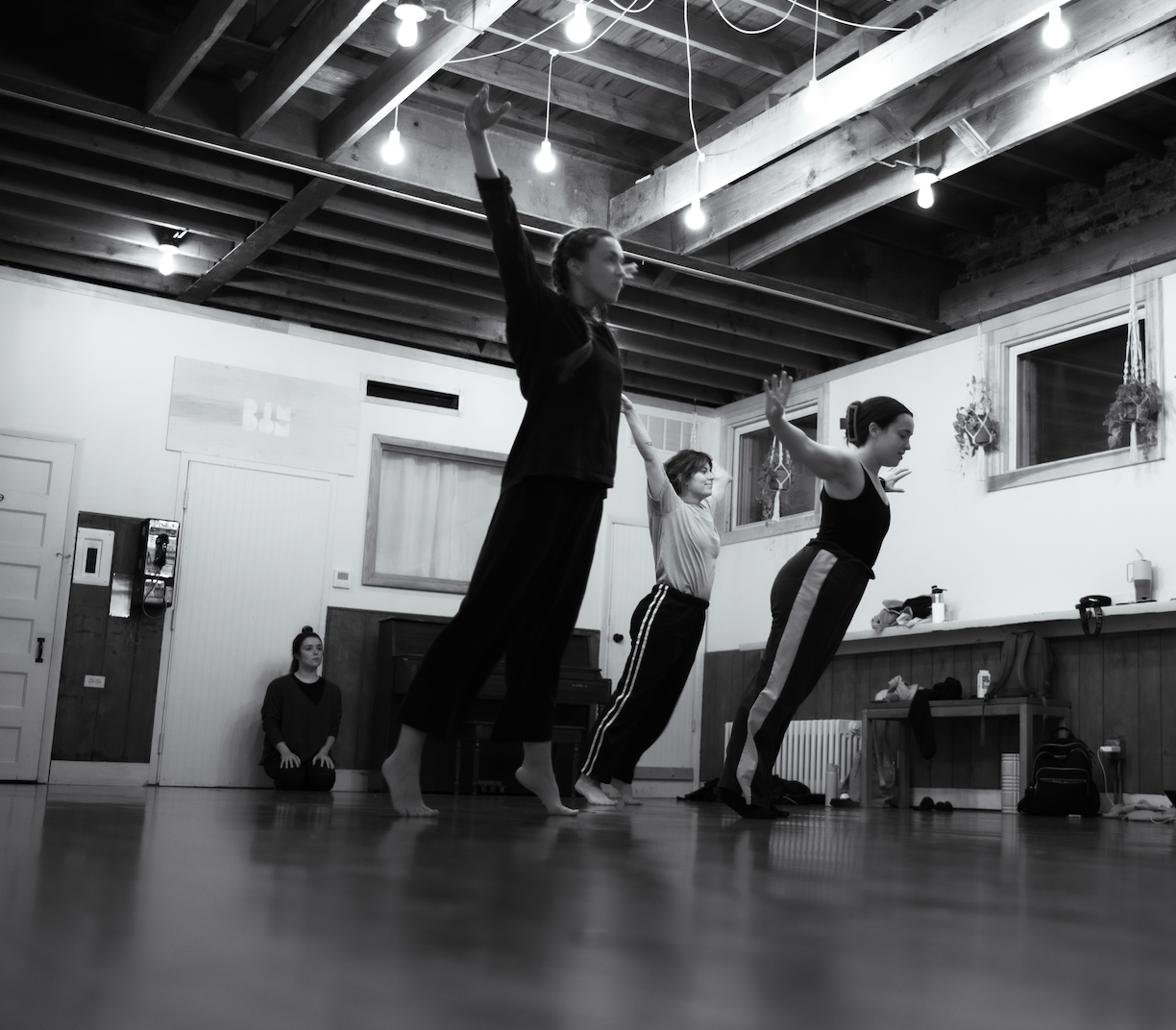
Originating from of a time of grief and feeling disoriented by ambivalence, I questioned how someone could actually live with this kind of embodied dissonance and still move forward with life. As I explored this question through dancemaking, Contraflow became a container for me to play with and allow these seemingly opposing, confusing contradictions to radically co-exist. During the early development of Contraflow, we identified the term “embodied contradiction” as a situational observing or sensing the simmering tension between opposing truths, or complex dualities we carry deeply within the body.
Contraflow became a cathartic and riveting process for me to explore contradiction, to descend through uncertainty, to push against “either/or” thinking patterns, and to embrace change with more ease and flow. Releasing my grip on “either/or” thinking patterns allows me to soften, to listen, and to find an opening between the noise and chaos that accompanies grief. Through this process, I now recognize this opening as a situational nuance that creates space for possibility and newness to emerge. When contradiction or conflict steamrolls forward, it is nuance that pushes through. As a collective, Contraflow has expanded our endurance and our awareness, both physically, mentally, and emotionally. It has asked us to consider how we show up in our bodies during moments of chaos or grief, and it has pushed us to find nuance amongst contradiction.
Contraflow exists as a mirror, stirring sensations, memories, or emotions that invite you to witness and reflect on your own nuanced contradictions, while staying present in your body. This performance does not feed an answer. Instead, it serves as an invitation to sit within the complexity of contradiction. Notice the friction, listen to the opposition, and allow the tension rise and flow freely through the soft tissues of your body.
Photos by McCall McClellan
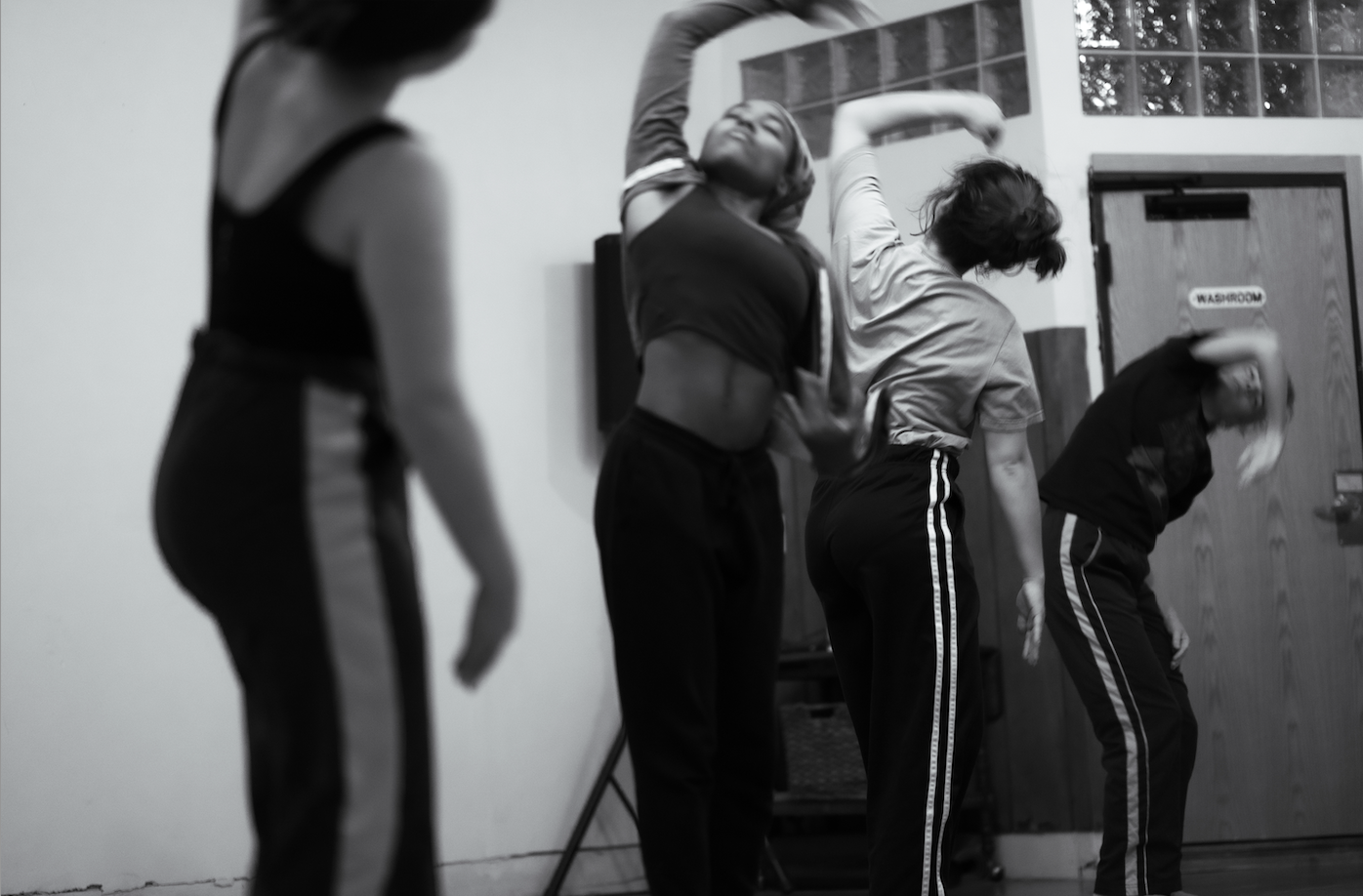
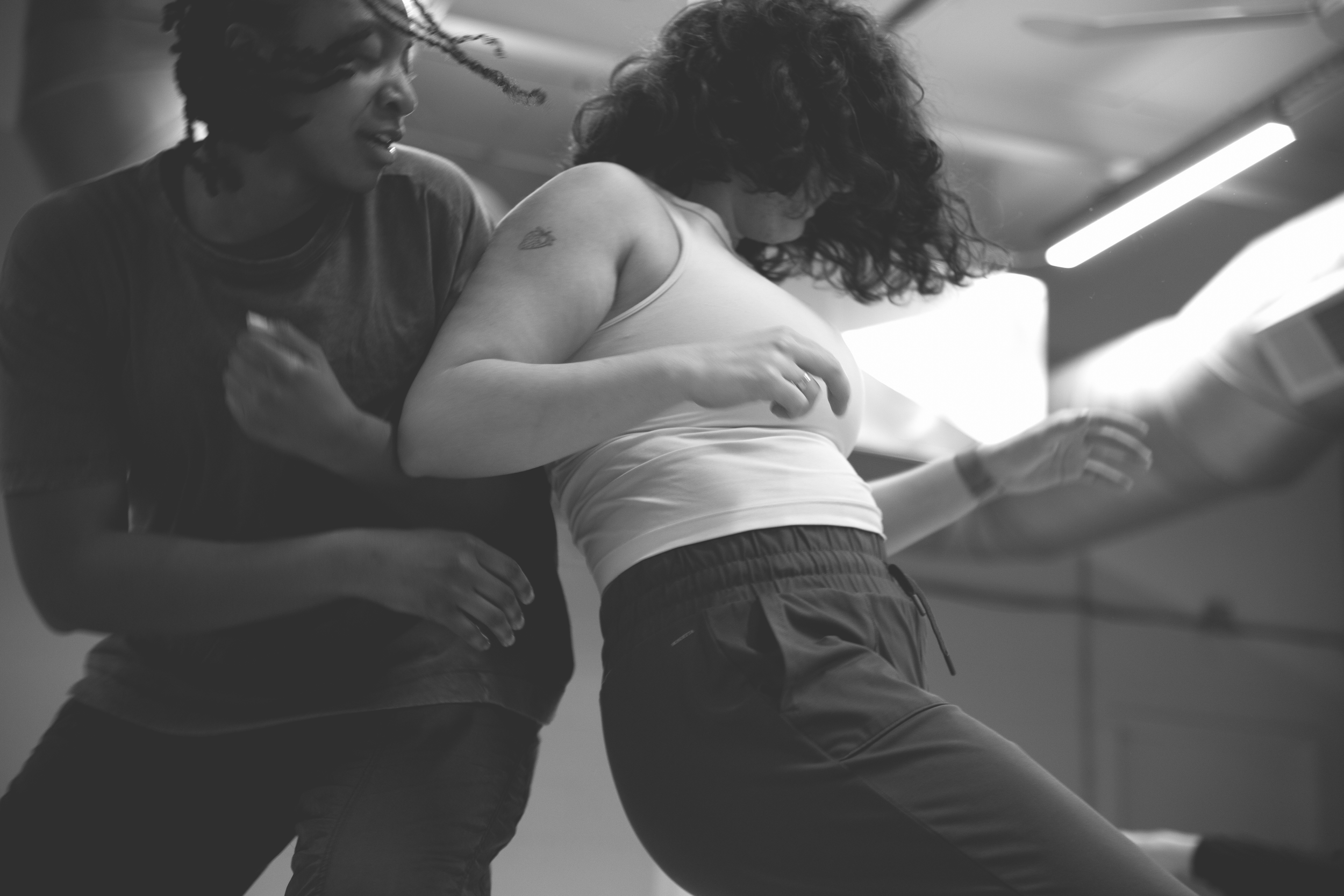
What are you holding on to?
What are you ready to release?
Where does tension live in your body?
Where can you soften?
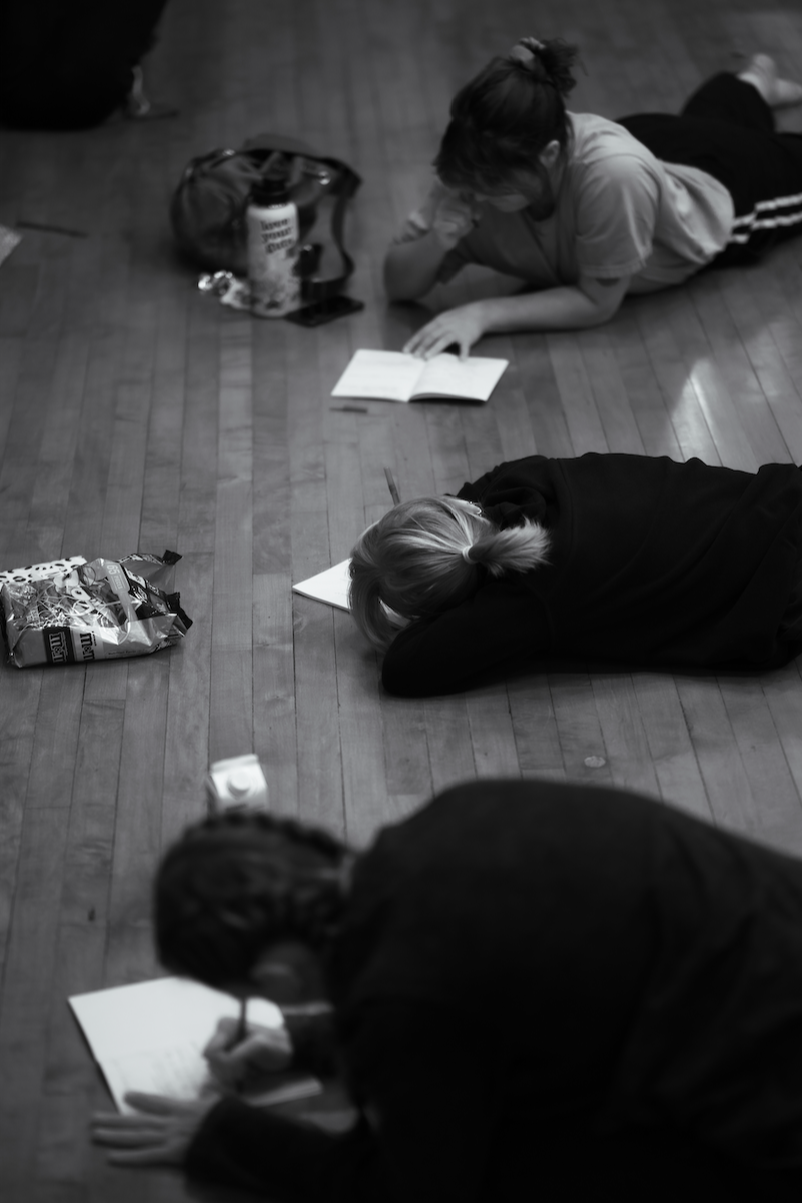
Free-writing plays a significant role in my practice. Even if a process begins with improvisation or movement generation, journaling often precedes movement. Writing helps me leave my headspace and invites an arrival into my body space. The beginning of Contraflow started from a series of questions that probed internalized sensations of tension and contradiction – where do these sensations come from, and how do they start?
Background photo by Sarah Jeffers
Photo to the right by McCall McClellan

COLLECTIVE DEFENSE
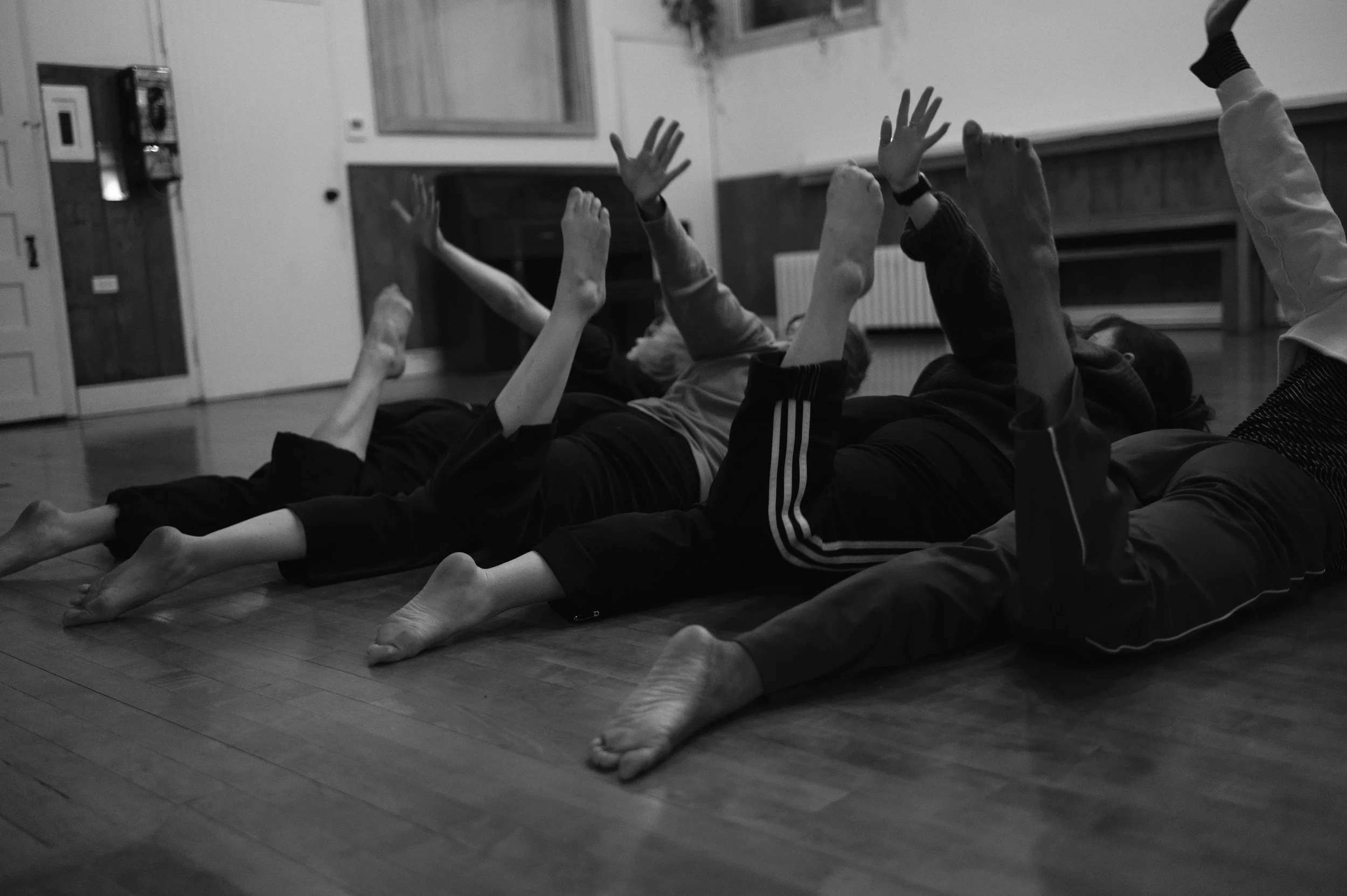
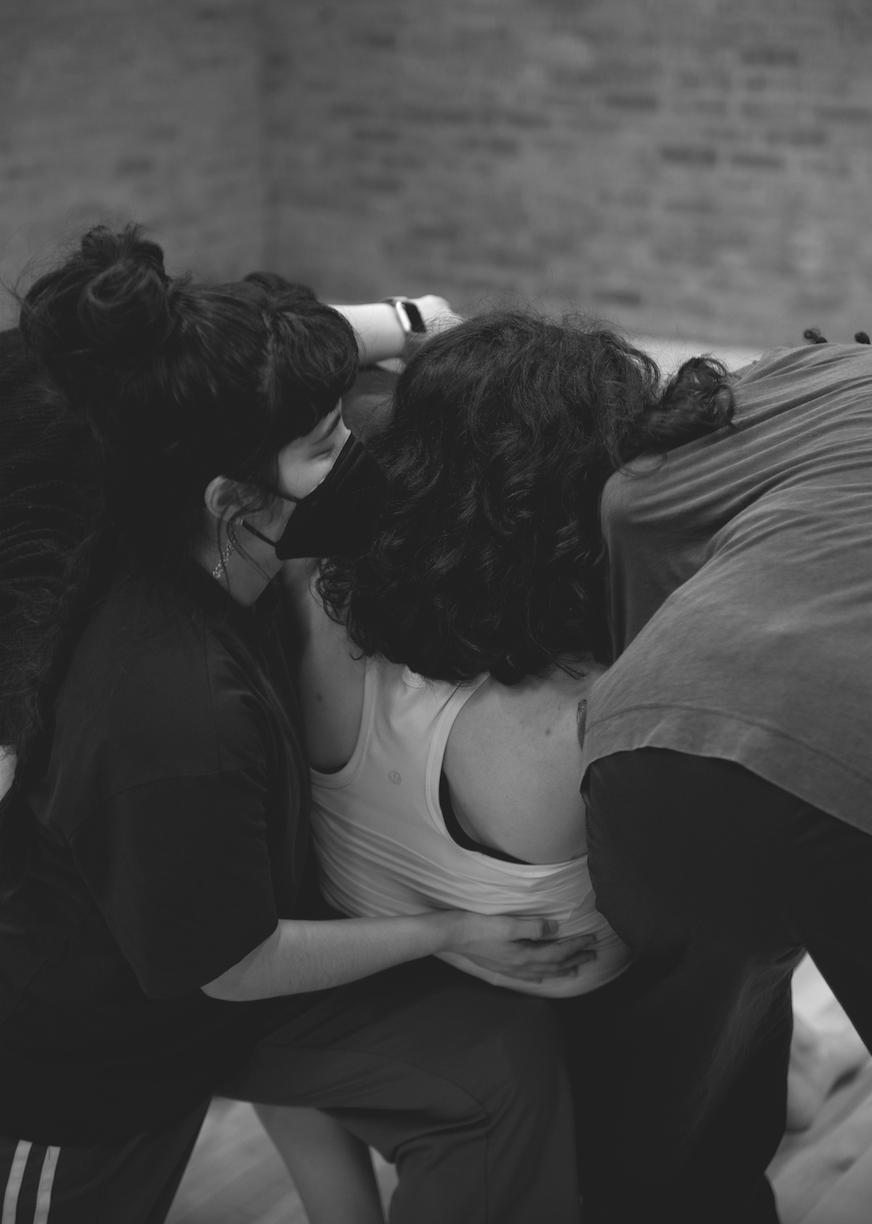
One of the first sections we developed for Contraflow was what would eventually become Collective Defense. What started as an early investigation into intersecting space, we explored intersecting pathways, gradually increasing the speed and rhythm of our movement while also constraining the available space. As the dancers’ paths crossed within tighter constraints, an amoeba-like form began to emerge—a collective body that shifted, folded, and reorganized itself in constant motion.
From there, our questions grew increasingly physical: What happens if one dancer suddenly surrenders their weight to the floor? How does the weight of one body affect the rest of the group? These questions transformed this moving cluster from a spatial pattern into an organism whose survival depended on the responsiveness of every body within it.
As we continued to play with this idea, another question surfaced: What changes when the collective body refuses to let someone pass through? From here, this score then turned into a game: as one dancer attempted to pass through the amoeba, the other dancers worked together to stop her. As we played with resistance, yielding, momentum, and surrender, we discovered a dynamic that oscillated between conflict and care. Slowly, this improvisational score evolved into what we now call Collective Defense.
For me, this section embodies contradiction. When I see the dancers run, collide, and push relentlessly against one another, I hear noise. I imagine a room full of people with deeply held, conflicting beliefs speaking—sometimes shouting—over one another, each striving to be heard. Voices move past one another rather than toward one another. Although no words are spoken, the friction becomes visible through the body. It is uncomfortable to watch, yet it so clearly presents contradiction and opposition pushing in on itself.
At the same time, Collective Defense is also interdependence, sensitivity, and spatial awareness. The same bodies that resist one another are equally responsible for supporting one another. When one dancer releases their weight into the group, the dynamic shifts immediately. What was once forceful and chaotic softens into something fluid, tender, and attentive. The collective absorbs rather than rejects. In that moment, through contradiction, nuance emerges.
To me, this shift reveals the nuance of embodied contradiction. Strength and softness, resistance and care, autonomy and dependence exist simultaneously rather than in opposition. The body does not resolve contradiction; it learns to hold it.
Although it was one of the earliest sections we created, Collective Defense ultimately became the foundation of Contraflow. It has established the physical and emotional structure of the work, offering a way to explore contradiction not as an abstract concept, but as something experienced, negotiated, and transformed through the body.
Background photo by Sarah Jeffers
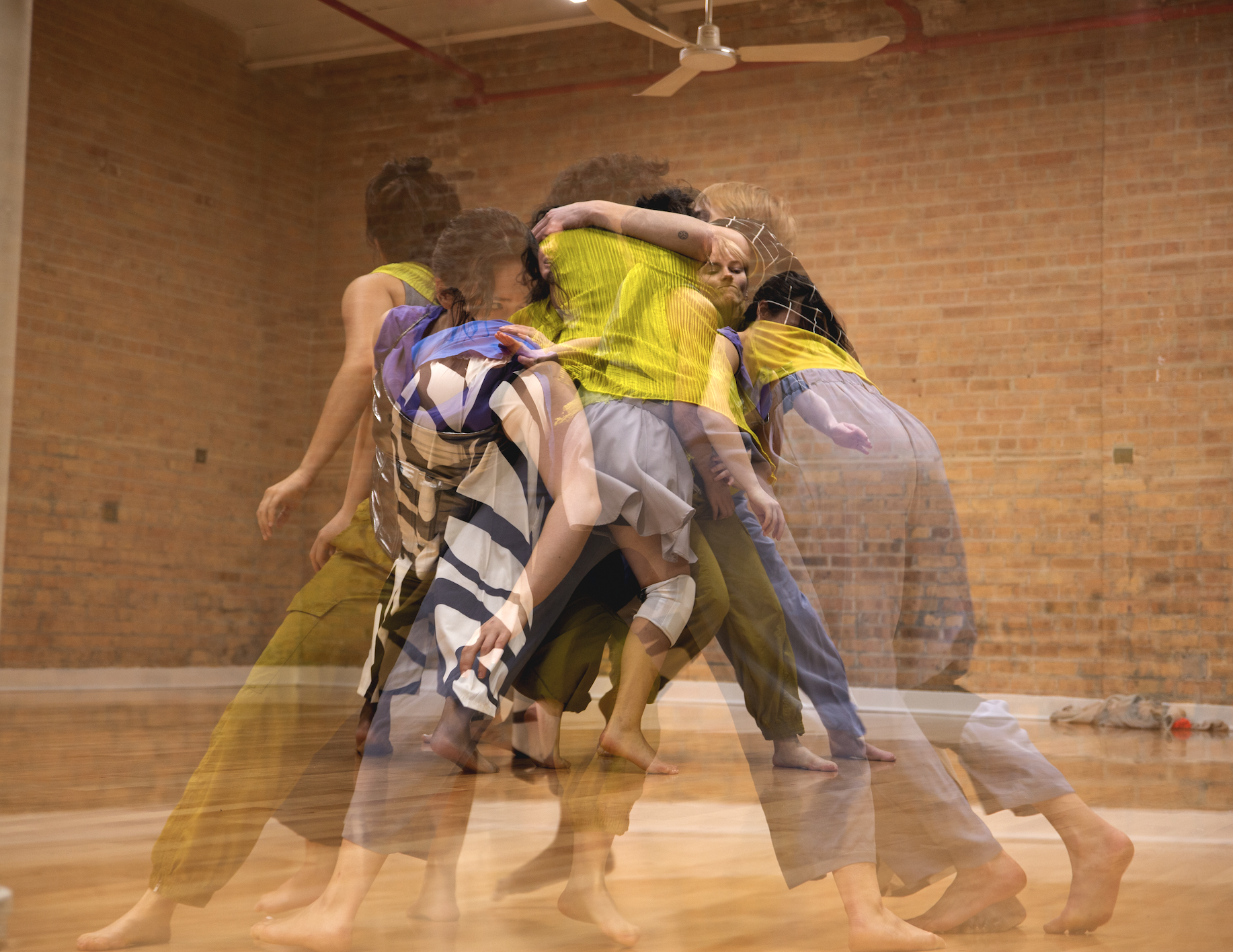
Photo by Sarah Jeffers
COSTUMES
“Sometimes it’s about what pleases you, not necessarily what the audience interprets. If it feels right to you, then it’s right!”
- Tara Webb
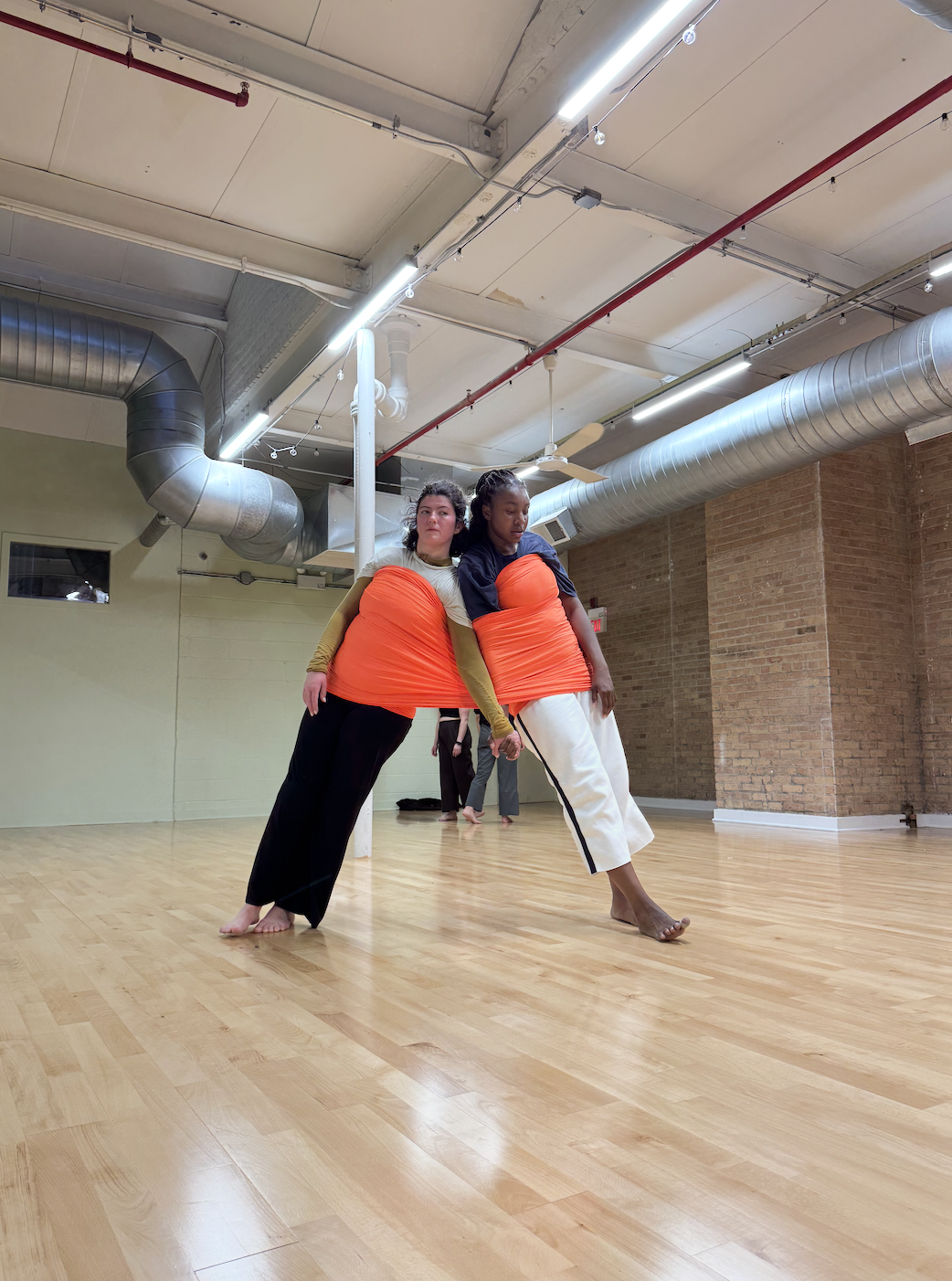
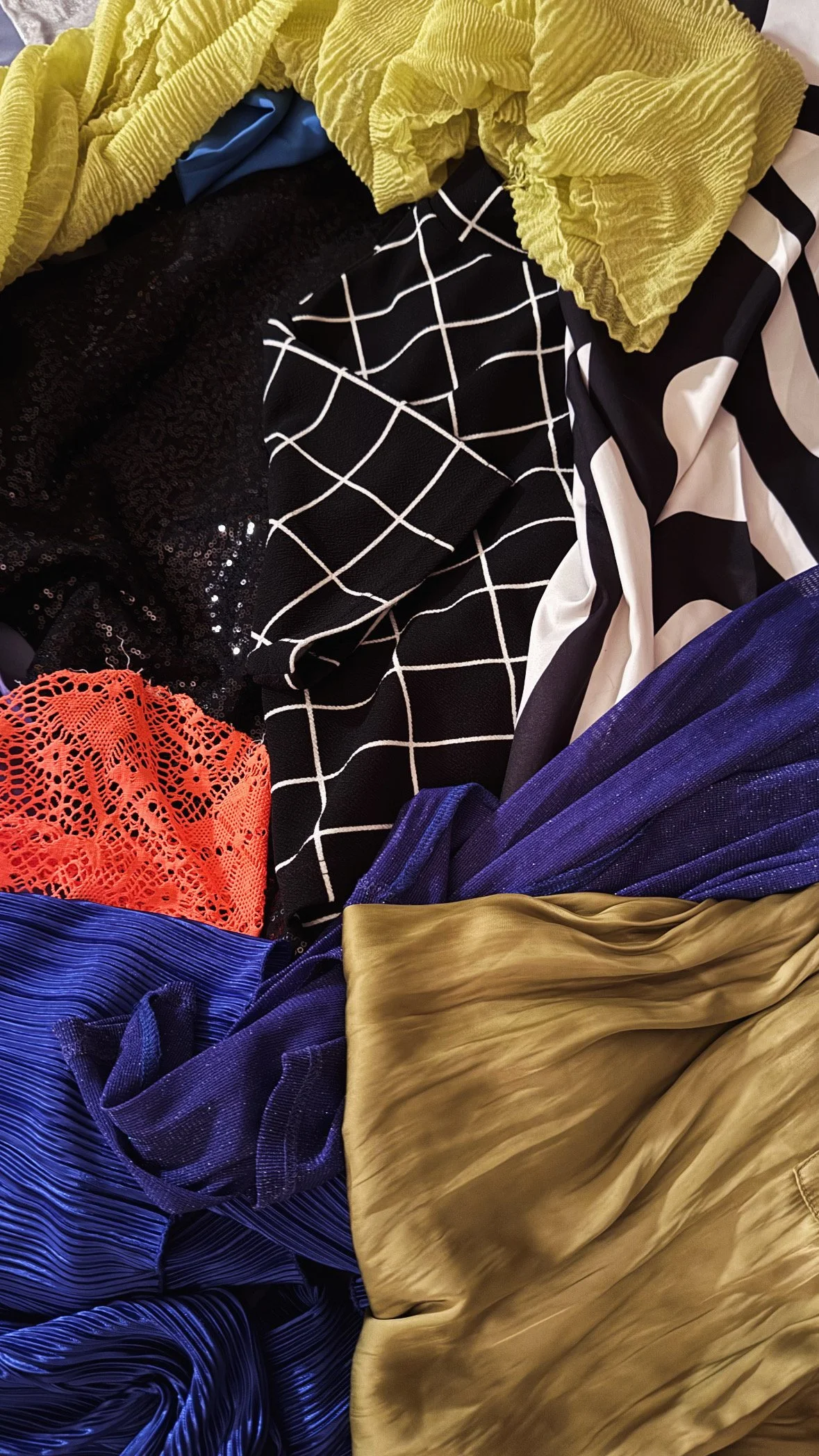
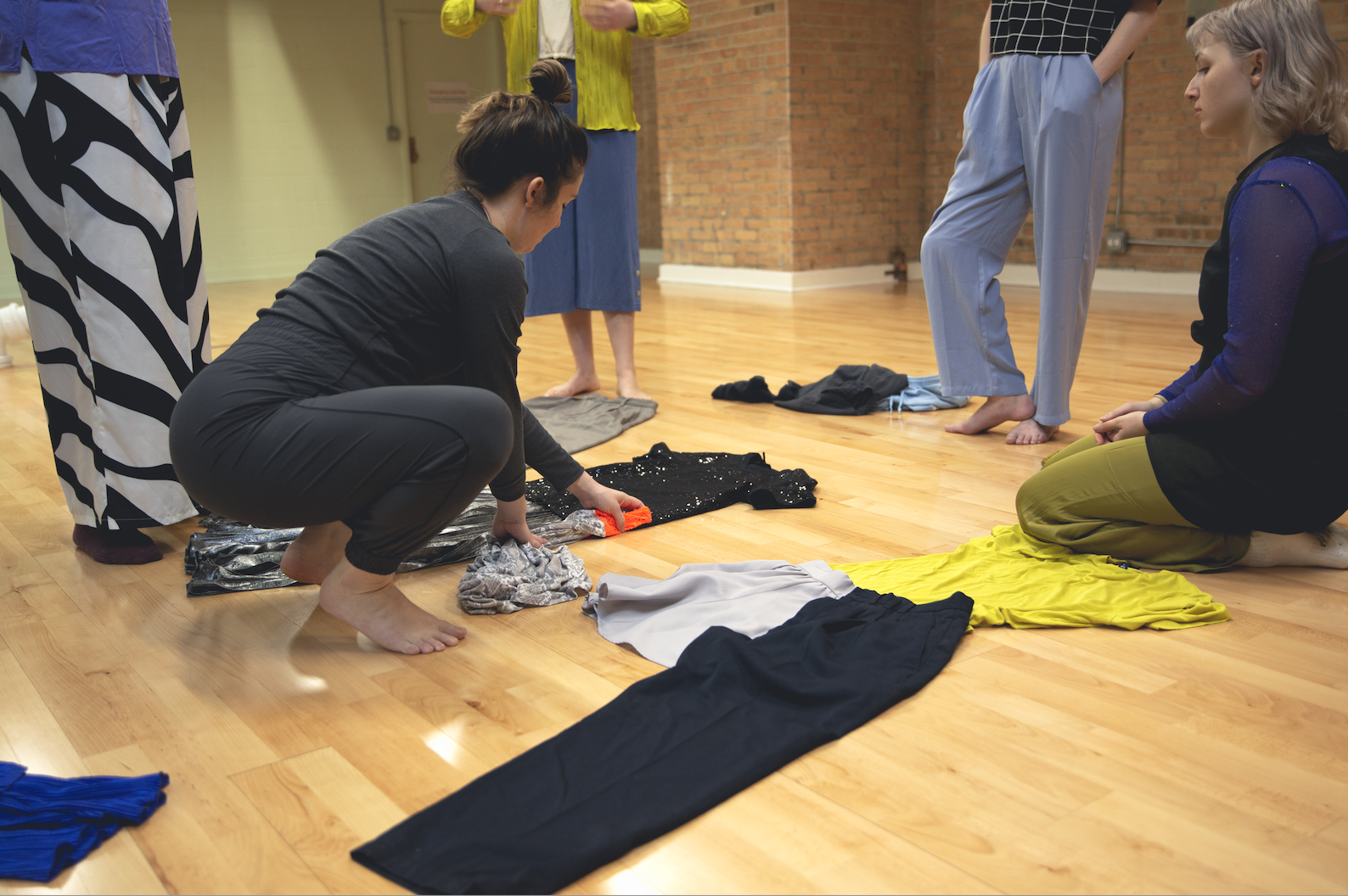
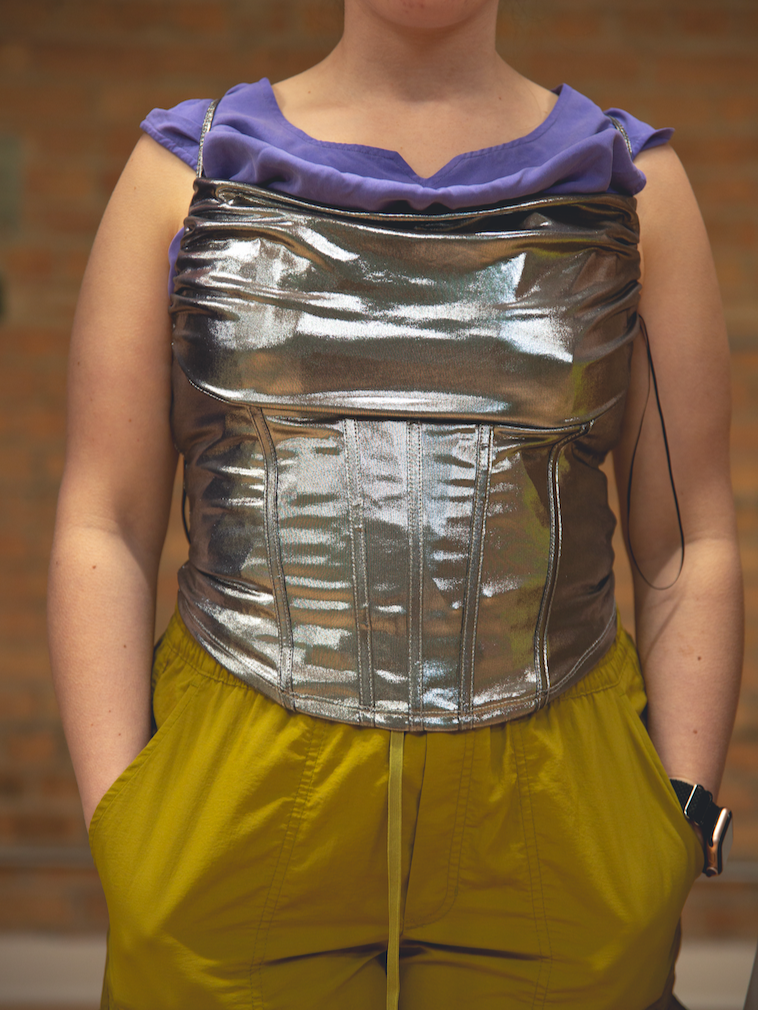
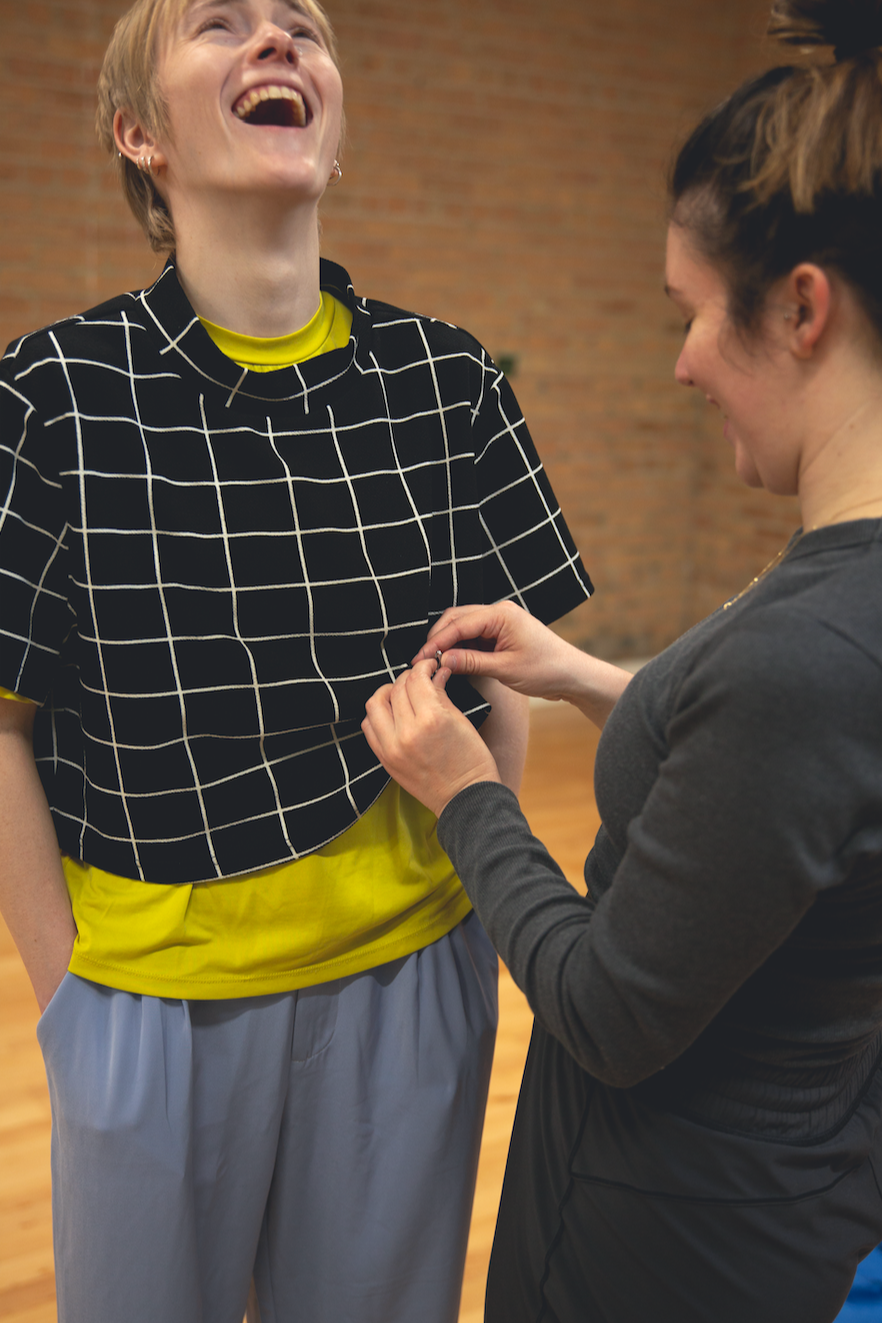
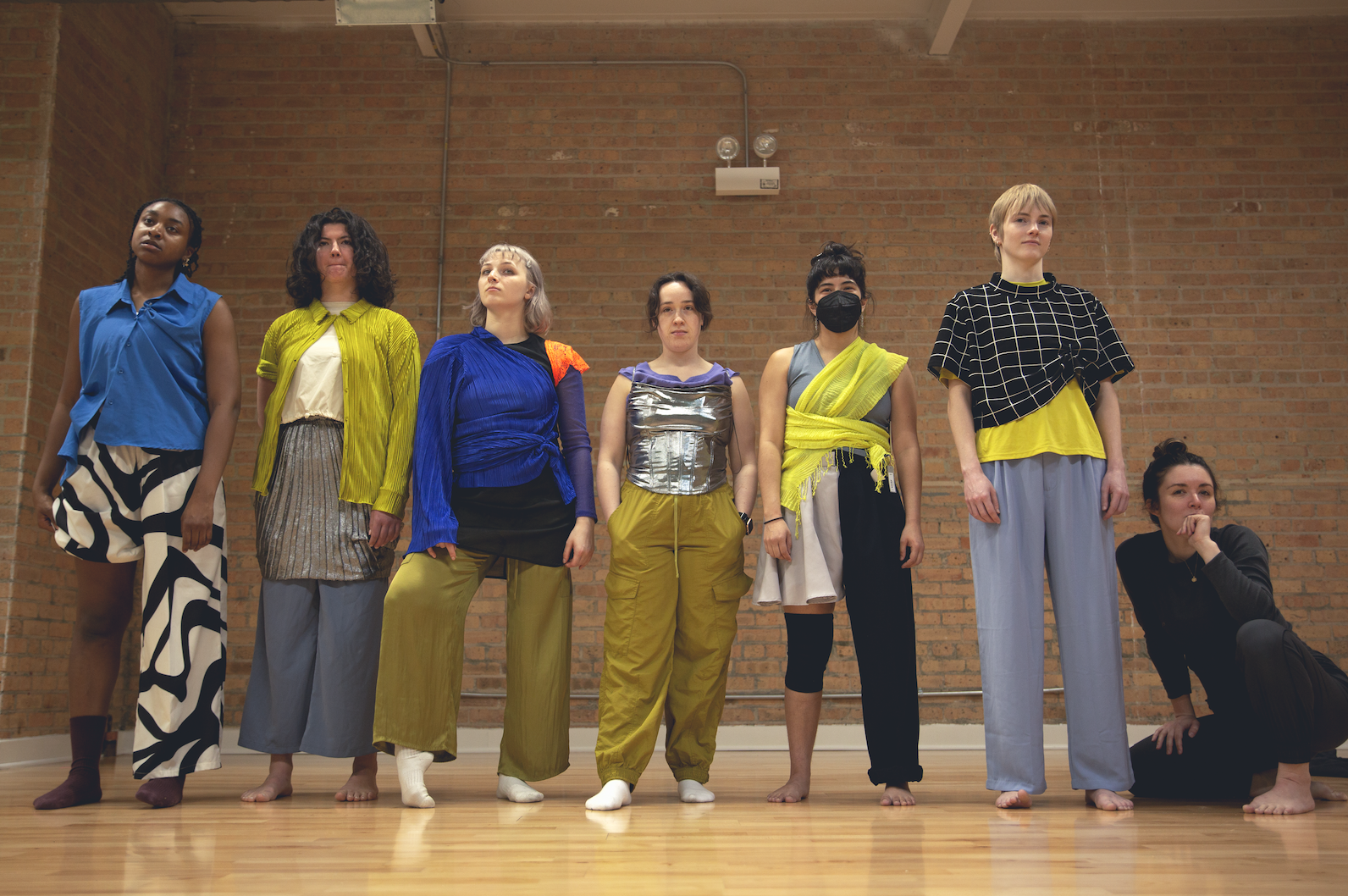
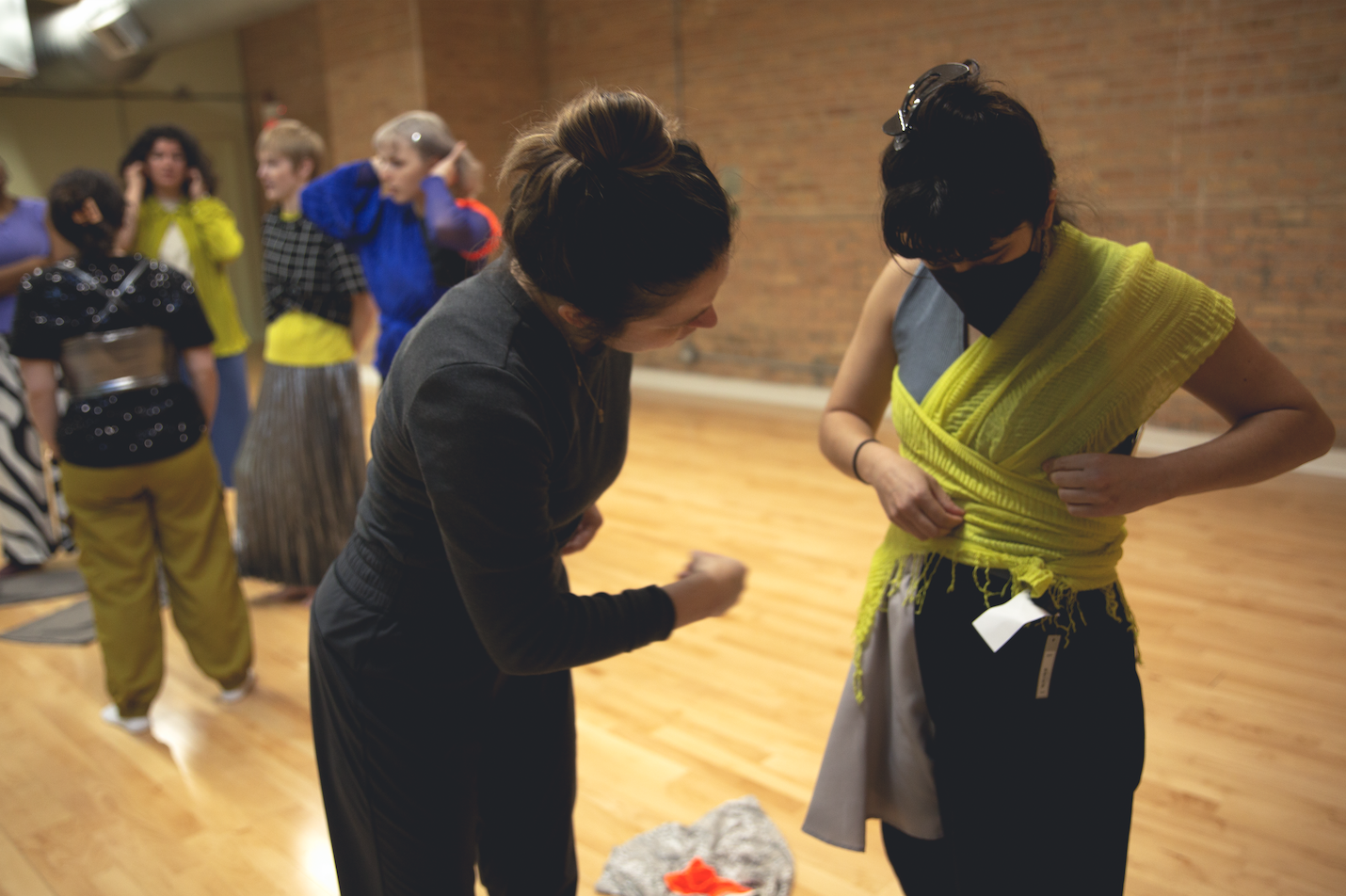
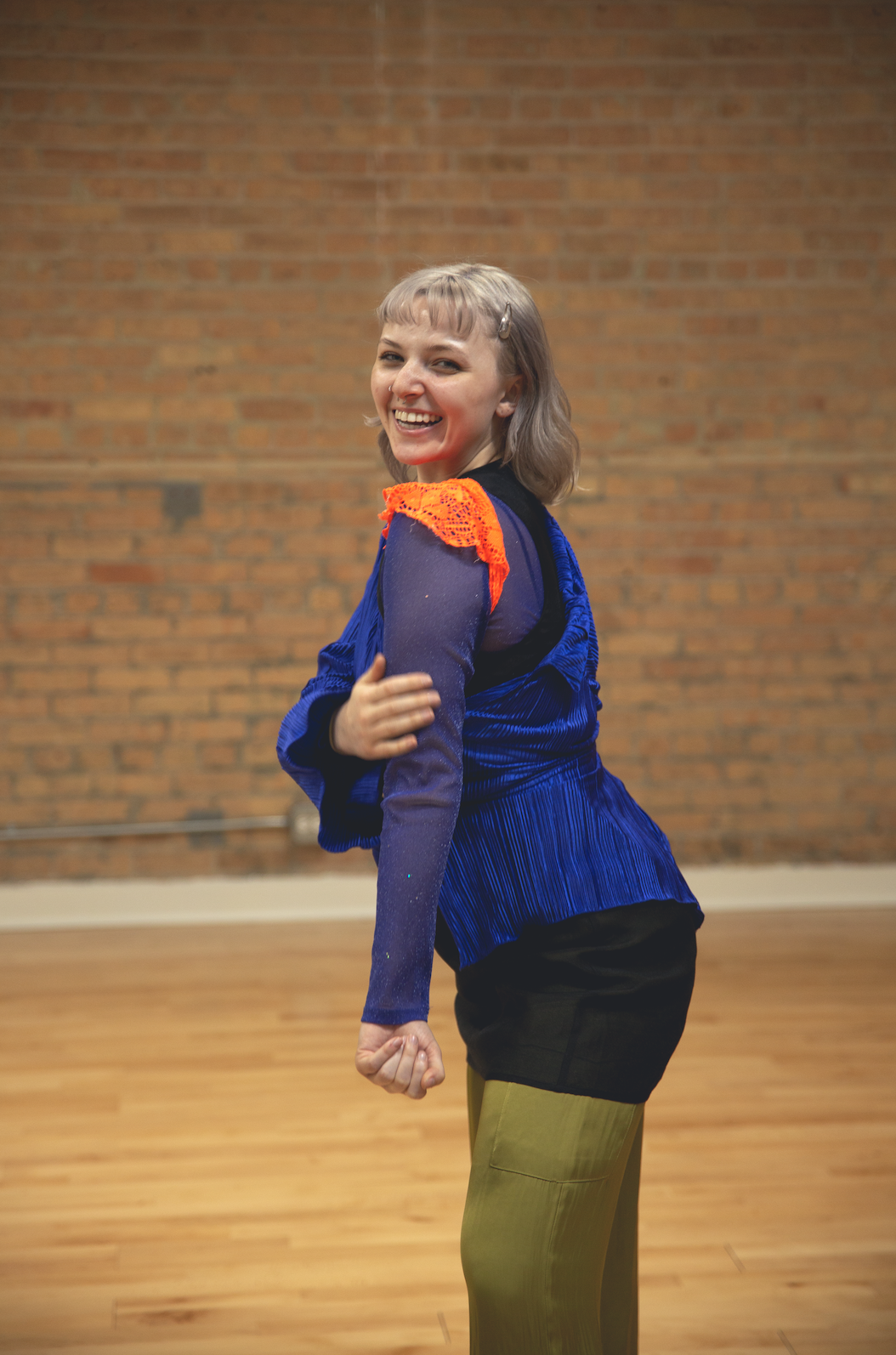
For Contraflow, I wanted the costumes to create a vibrant energy while exuding high contrast and opposition. I wanted the color palette to communicate a disharmony, or a push-and-pull quality that builds a form of tension on a visual level. As a personal preference, I love working with contrasting textures within a color palette and seeing how light highlights or shifts the various tones and textured patterns.
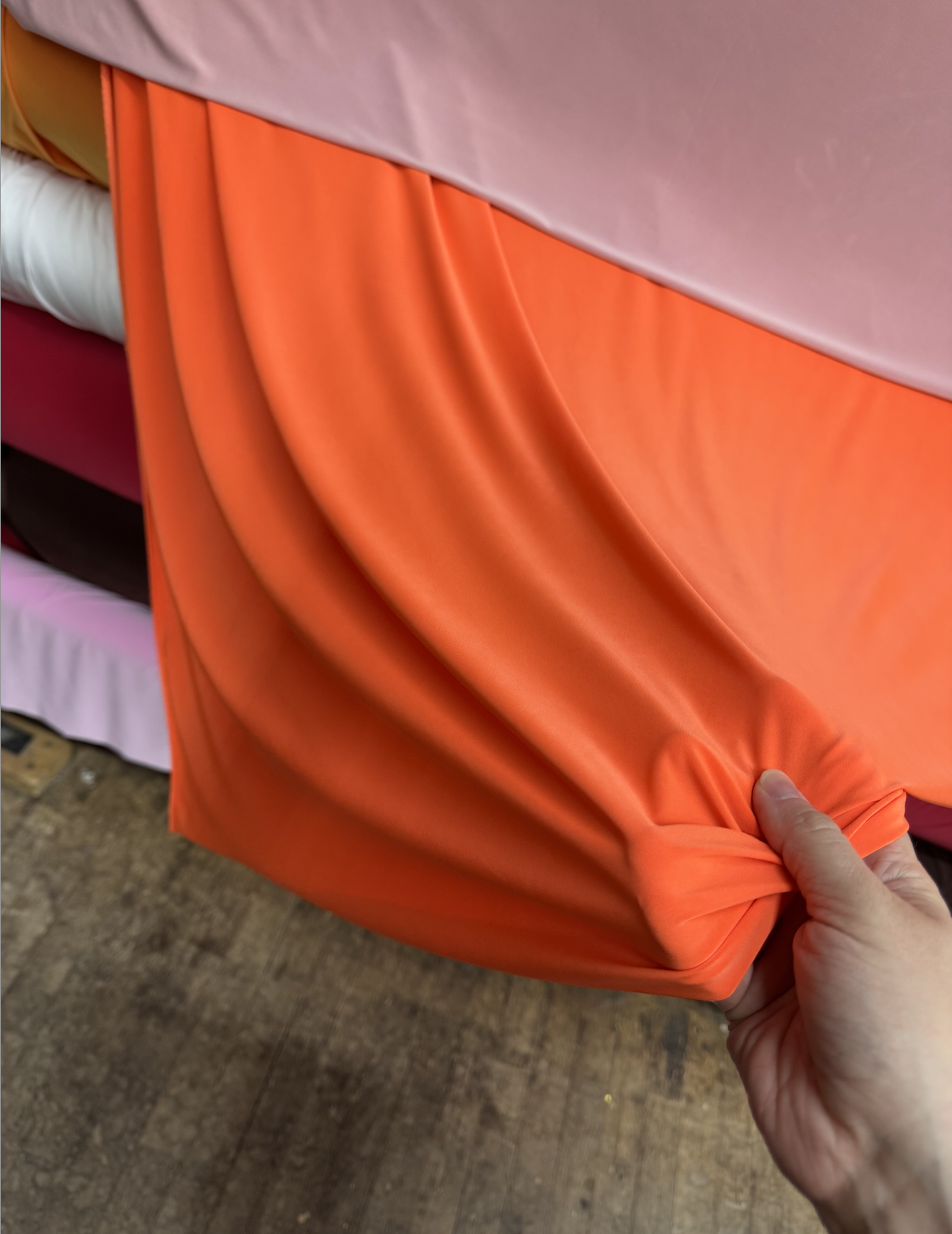
When consulting with my friend, and North Carolina-based costume designer and artist, Tara Webb, she encouraged me to find an adjacent third color to my current color palette as a way to build a line of tension. Tara advised using a third, disharmonious color for smaller, embellished details that might not be pleasing to the eye but would function as a line of tension in stark contrast to the rest of the palette. Neon orange quickly became the third disharmonious color. By integrating about 6 yards of neon orange spandex fabric into the piece, I was able to not only find a through line connecting each dancer, but a way to connect the entire ensemble to the fabric.
Photos by Sarah Jeffers
FABRIC AS
A BODY
Working with a durable yet flexible fabric was something I was curious about researching early on in the process. When thinking about the idea of tension, I was drawn to finding movement qualities such as stretching, pulling, expanding, retracting, and collapsing. While these qualities allowed us to explore internalized tension through the body, I also wanted to make tension visible—to give it a tangible, tactile form. I kept returning to questions such as: What does resistance between two or more bodies look like? How does the tautness between opposing forces shape their relationship?
The fabric you see in Contraflow lends itself to qualities like bounce, rebound, and chain-like reactions when given weight and pulled tightly between two bodies through the space. Working with the fabric as a prop led to an understanding that the fabric was its own body. The dancers developed an embodied relationship with it, wrapping, stretching, pulling, and falling into its resistance. Over time, we pushed this relationship further, exploring the point at which the fabric no longer functioned as a prop or costume piece, but as an active participant in the choreography.
As our relationship with the fabric deepened, it became a way of investigating tension between bodies, ideas, and lived realities. We discovered that two forces pulling away from one another were profoundly more connected: the greater the resistance, the more apparent their relationship became.
In this way, the fabric came to represent the space between embodied contradictions. Rather than viewing contradiction as a divide to be crossed or resolved, the fabric revealed it as a connective force—a space held in tension that remains flexible, resilient, and capable of transformation. It became both a physical partner and a visual metaphor, revealing the invisible relationships that exist between opposing realities.